Leads in the first 14 days

Marketing strategy
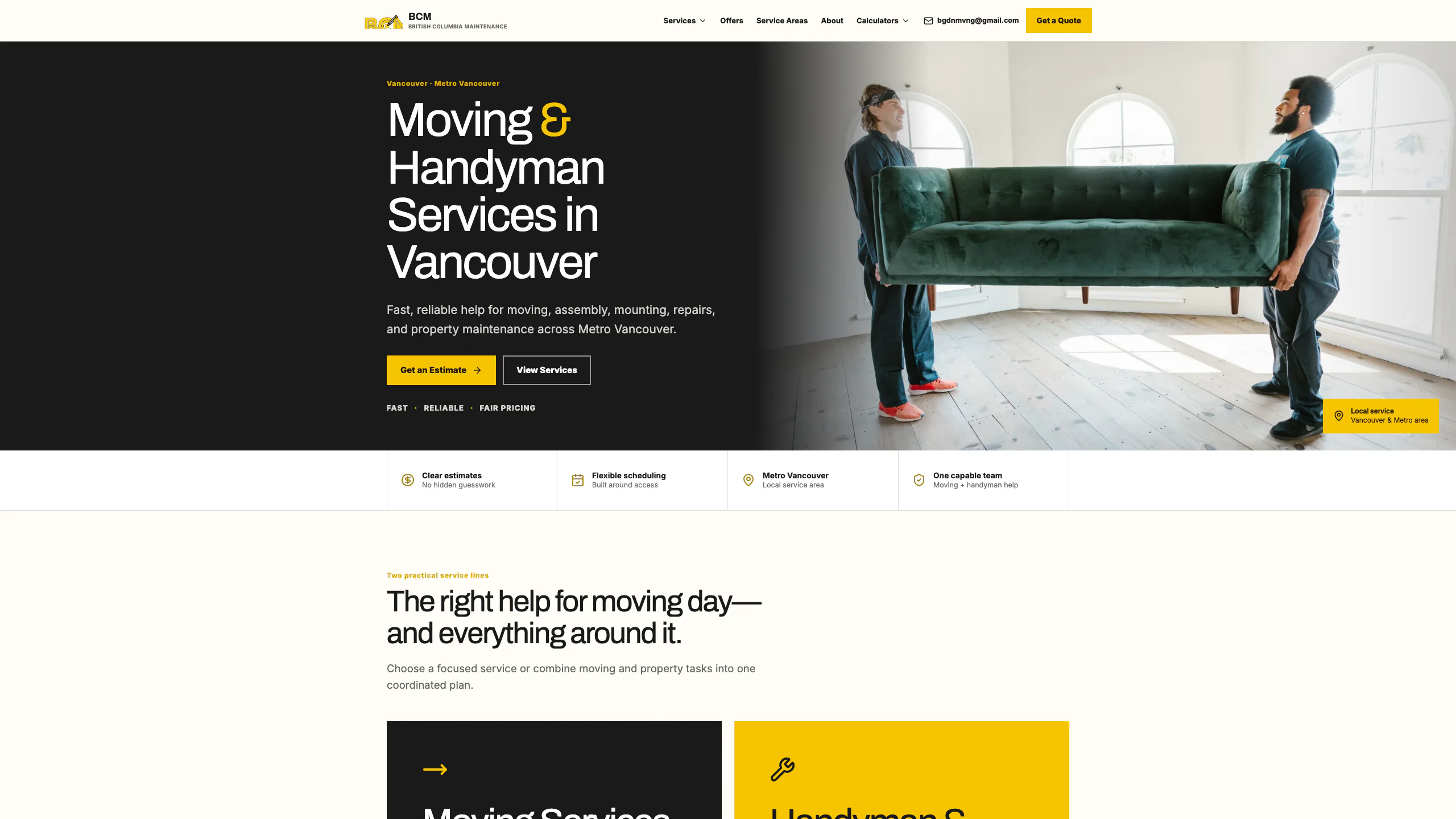
A full acquisition platform for a Vancouver home-services business
Strategy, UX/UI, Next.js development, two interactive estimators, local service architecture, analytics and paid acquisition working as one growth system.
Results
The project at a glance.
The project is ongoing. Its first 14-day acquisition cycle used C$200 in media spend to generate 20 leads. Seventeen became paying moving customers, producing C$8,041 in revenue and C$3,392.82 remaining after staff payments and other operating costs.
Booked moves / 85% conversion
Revenue from the launch cycle
01 / Challenge
Building the digital foundation for a local service business
BCM combines moving, handyman and property-maintenance work across Metro Vancouver. It needed more than a campaign landing page: customers had to understand two service lines, compare options, estimate an unfamiliar job and trust a new local provider before making contact.
02 / Approach
A custom website designed as an acquisition system
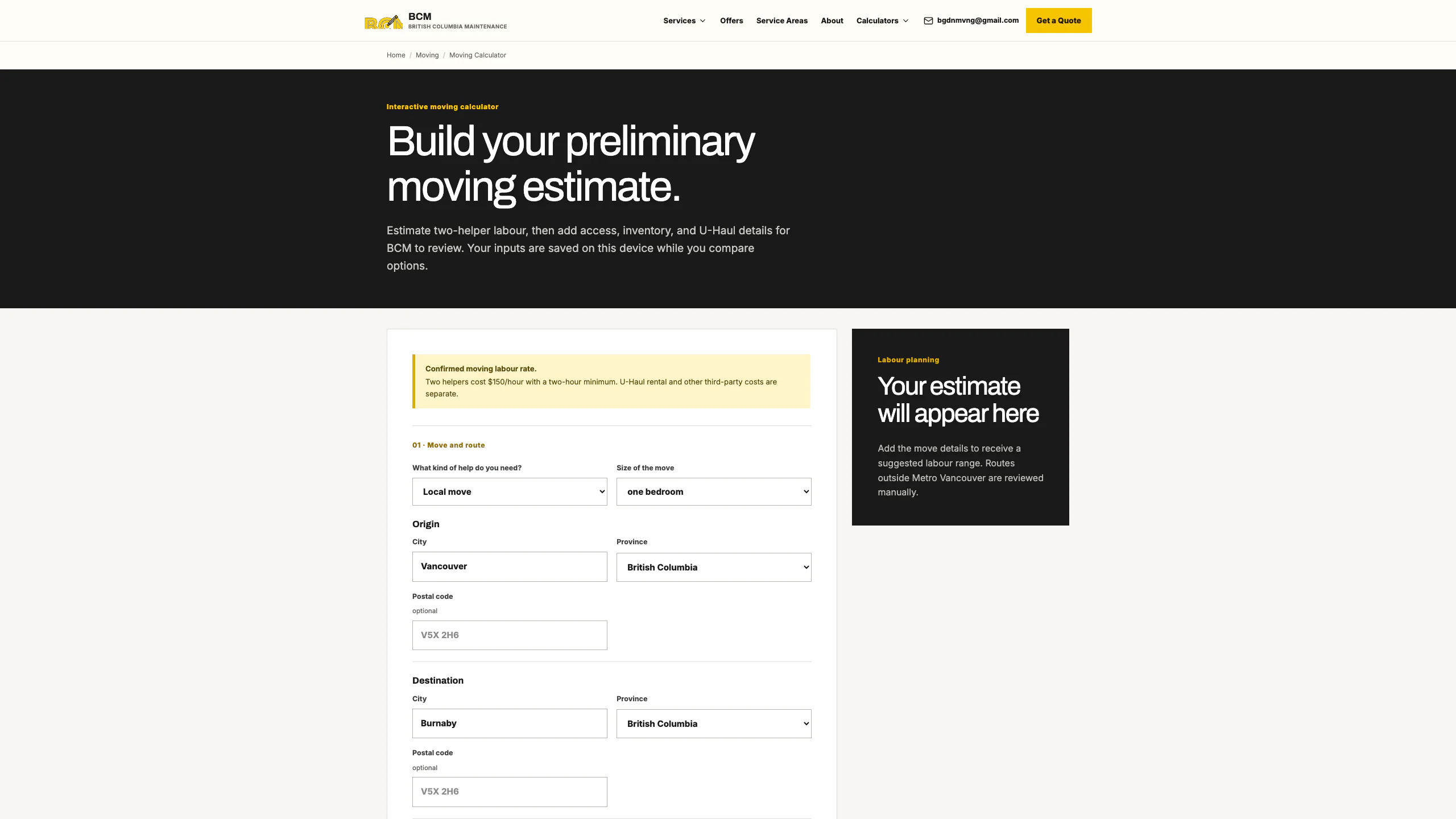
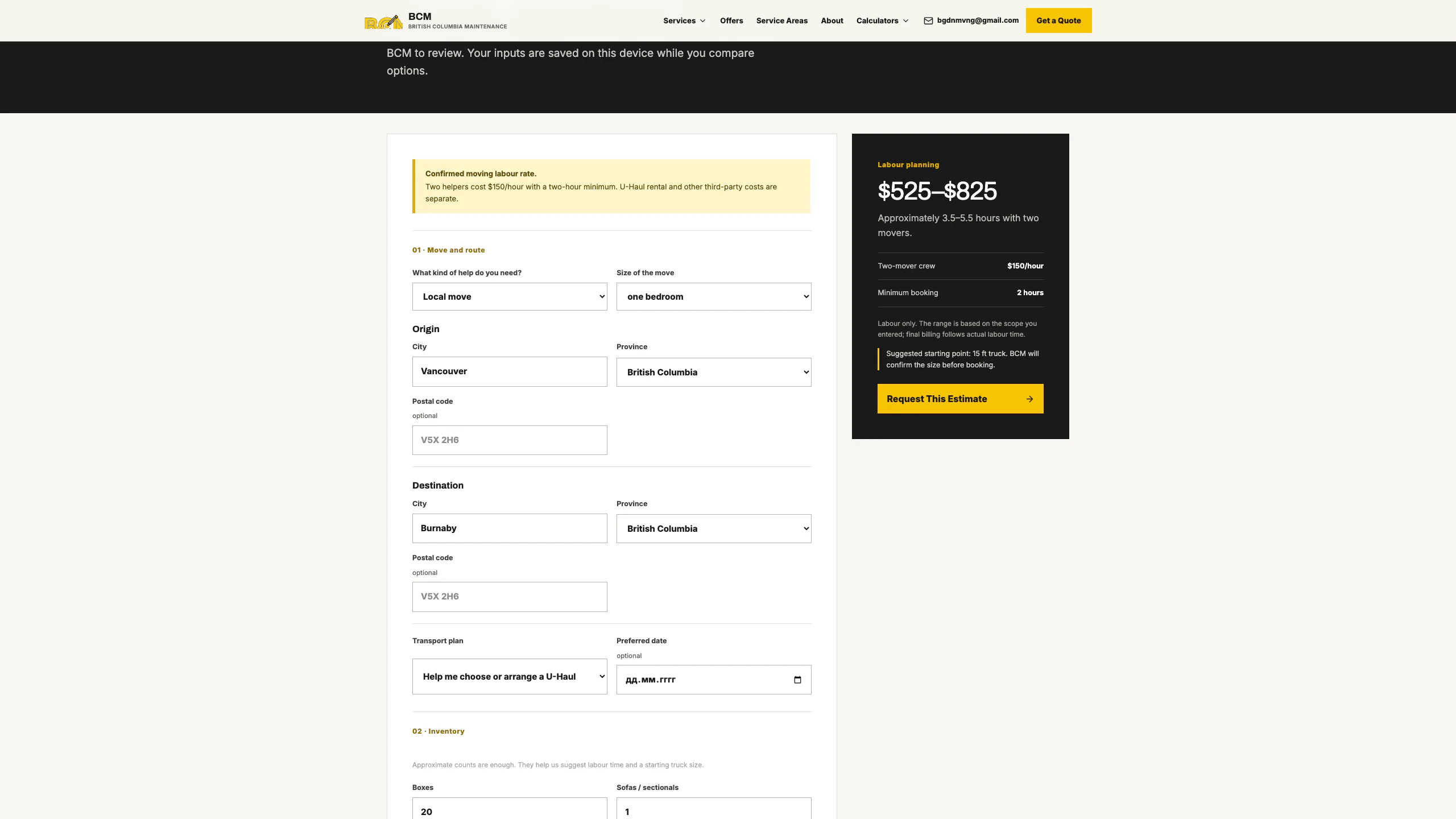
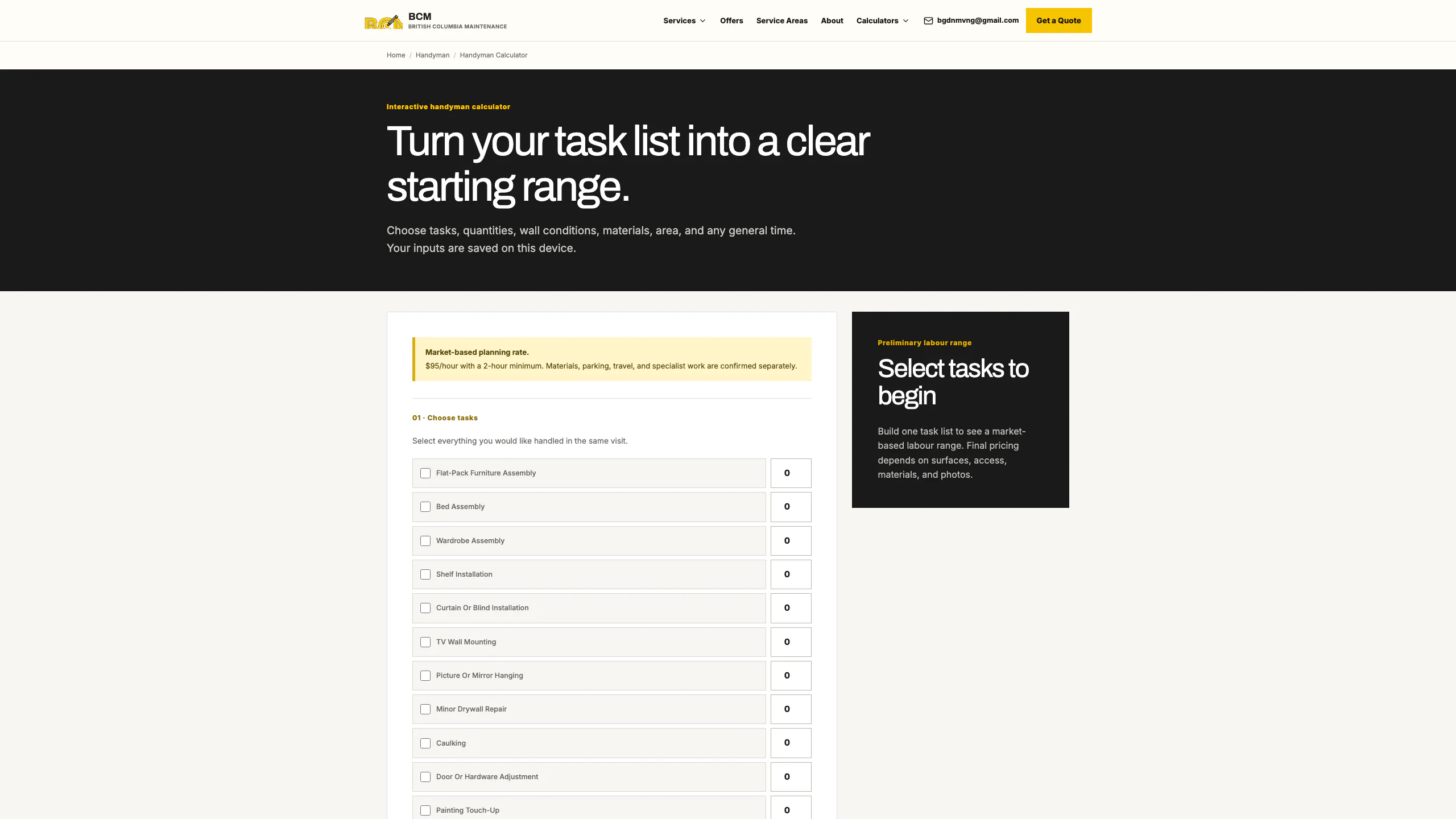
We shaped the strategy, information architecture, UX/UI and responsive Next.js build. Separate moving and handyman journeys, offer pages and local service-area routes support discovery. Two custom calculators turn move inventory, access conditions or handyman task lists into preliminary labour ranges, save inputs on the device and carry the full scope into an estimate request. Consent-aware analytics, Meta Pixel and server-side conversion tracking connect the experience to campaign measurement.
03 / Result
Strong launch economics inside an ongoing growth project
The first C$200 acquisition cycle produced 20 moving leads at C$10 per lead in two weeks. Seventeen purchased the service, generating C$8,041 in revenue — an average of C$473 per booked move — with C$3,392.82 remaining after staff and other operating costs. This is the first measured launch result; the website, local acquisition structure and campaigns continue to evolve.
Inside the acquisition system
The website qualifies the job before BCM takes the call.
BCM sells variable, local work: the price changes with inventory, access, distance, materials and task conditions. The product was therefore designed to do more than generate enquiries. It helps a customer choose the right service, structure the scope and arrive at the conversation with a useful preliminary range.
Conversion path
A local search becomes a scoped request—not an empty form.
Every layer removes a different uncertainty. Geographic pages establish relevance, service pages explain the work, the right calculator collects operational detail, and measurement connects the request back to acquisition.
Match local intent
Moving, handyman, offer and nine Metro Vancouver service-area routes give each search a relevant starting point.
Choose the right path
Separate service journeys prevent a household move and a multi-task handyman visit from being forced through the same generic pitch.
Structure the scope
The calculators collect the variables BCM needs to plan labour, access, equipment and the first realistic range.
Hand off with context
The saved calculation travels into the estimate request, while attribution keeps the originating campaign visible.
Two pricing engines
Two services required two different decision models.
The calculators share one visual language but not one formula. Each reflects how the underlying service is actually scoped and sold.
Moving estimator
01Plan labour, access and transport together.
C$150 / hour · two helpers · two-hour minimum
The moving flow builds a practical picture of the job before a crew is discussed.
- Move type, size and route
- Inventory and special items
- Stairs, elevators and carry distance
- Packing and truck requirements
Customer receives
A preliminary labour range, a starting truck-size suggestion and a complete scope ready to send to BCM.
Handyman estimator
02Turn many small tasks into one workable visit.
C$95 / hour · two-hour minimum
The handyman flow combines task quantity with the conditions that materially affect time.
- Task types and quantities
- Wall and surface conditions
- Materials and hardware status
- Area, parking and access notes
Customer receives
One market-based labour range and one organized task list instead of a vague request spread across messages.
Acquisition architecture
The conversion does not start—or end—at the calculator.
The value comes from the connection between demand capture, product logic and measurement. Pages, tools and campaigns operate as one loop rather than independent deliverables.
Demand
Local search and paid campaigns bring customers with a specific service need.
Relevance
Service, offer and city pages answer the need in the right geographic context.
Qualification
The appropriate estimator turns intent into structured operational inputs.
Measurement
Consent-aware analytics and conversion tracking connect the request to its source and result.
First measured cycle
A C$200 test produced a visible operating result.
These are results from the first 14 days of moving acquisition. They describe one measured launch cycle, not a projected lifetime return.
Media spend
Initial moving campaign
Leads
Generated in 14 days
Cost per lead
Spend divided by tracked leads
Booked moves
85% of the tracked leads
Booked revenue
Average C$473 per booked move
Amount remaining
After staff and other operating costs
The project remains active. Future cycles can change as budget, demand, capacity and service mix change; the important foundation is that the journey can now be measured and improved.
What was delivered
Not a brochure site. A working acquisition layer for a local operation.
BCM combines positioning, local information architecture, custom product logic, responsive development, attribution and paid acquisition. The site explains the service, the calculators translate uncertainty into scope, and the measurement layer shows which demand turns into real booked work.
Selected details
The work in context.
Selected moments from the process, the working system and the final delivery.
Start a project
Have a similar challenge?
Marketing strategy